Upon reflection, the most important part of the project for me was how colors and creativity connected us across distances. As someone from Ranya in the Kurdistan Region of Iraq,I saw myself and my community reflected in the shared expressions of hope, peace, and humanity. It reminded me that no matter how far apart we are, we can still gather around the same table of dreams. – Khalid qader Mohammed – 2025
A world Citizen. Anne, a perennial optimist and a ‘ Prisoner of Hope’ developed the idea of engaging multi generational world citizens to share their hopes and dreams for a better future. She used her inimitable style of art as a bridge to facilitate conversation. – Koresh Lakhan – 2025
Upon reflection the most important part of the 122 Conversations project was that people from so many different parts of the world came together and shared their stories. The questions were easy enough for all to answer, with a bit of reflection on their own lives. I was impressed by Anne Labovitz’s charismatic person and artist skills, by her creating such magnificent pieces of art out of the stories told by participants all over the world. 122 Conversations really connected people and captured the beauty in life!
I am proud of having been a part of a project that, 10 years later, is still relevant and makes people meet and reflect. – Monica Sandberg – 2025
Looking back, the most meaningful part of 122 Conversations for me was experiencing genuine connections between people across borders. I feel that the project continues to inspire hope for peace today, and I am truly grateful to have been a part of it. – Tomomi Takiguchi – 2025
The moment we hung Anne’s paintings in the Isumi City Office was like breathing life into the gray world around us. We love Anne’s colors filled of so many nations. It’s a world we want to live in. Thank you and we hope to continue somewhere in the future. Let’s make the world more colorful! Every day. – Pavel, Eiko, Reo, and Nao – 2025
“In this deeply challenging moment in history that is so full of “othering” out of fear and discomfort over change- 122 Conversations provides a concrete reminder that our stories, when heard and shared, unite us all in a common humanity”. Roselie Vasquez-Yetter, Co Executive Director PartnersGlobal, Together for Democratic Change- 2025
I remember helping with interpretation during some of the interviews. I figured Anne hoped to collect a pool of personal flare and impressions about the people in our city to later convert them into art. Today, in hindsight, this project appears to me as a symbol of a better time, when the world was more peaceful and the connections between our countries were much easier. We took this for granted! I wish Anne all the best in her art. With this project, she showed us how art may take unusual forms and create emotional bonds. – Vera Meshko – 2025
It’s an honor to be included in a piece of art that captures emotions and experiences from people all over the world. People I’ll never meet, but who I’m connected to by this invisible thread of commonality. I think it’s more important than ever to realize we are all part of something bigger, and more beautiful. – Renee Passel – 2025
I was recently at the airport (Terminal 2) where I saw a wonderful piece of art. It is called 122 Conversations by St Paul artist, Anne Labovitz…. Sometimes we relate to a person as an object. We say, “What can you do for me?” We treat them like an “it”- a Swede, a Russian, a Kurd, etc. If instead, we put aside our preconceptions and projections, if we encounter them in the fullness of their personhood, we “breach the barriers of a lofty solitude.” That which divides and separates us falls away. We discover an expanded space between us that we share. And in that space grows love and a sense of responsibility for a Thou. Buber writes, “all real living is meeting.” When we fully encounter another and The Other not as an object for use but another with whom to share a moment, we become fully human and the space between us becomes truly holy. – Bivrakha, Rabbi Alexander Davis- 2020
For Anne
For Anne
One footprint farther. Offering 122 steps more. One to enter the building. The last to wave at you from the door.
Steps 2 through 30, Is where the hunt began. Relentless, a huntress, Loose on the land.
I entered your memory, A New Year resolution. Enter your heart, A new revolution.
Room 122, 50 steps away. 20 more for you to the Bay. Yes, but 21 was the dealer’s call. To paint the picture, to paint them all.
WIth curls of burnt umber, And lips that would whisper. Eyes like dark midnight, And curves of a gypsy.
What would the final alchemy be? Was the question I had by Conversation 73.
Upon her return, With joyous solemnity, Gallery was alive, With all the celebrity.
Pastiche of life, Giving vision to thought. Giving life to emotion, Painted canvas was caught.
The emotion of moment. The feeling of time. I remember so well, Conversation 99.
Bookended by beauty. My bride by my side. Commerce paid in friendship. Was lain across an altar of pride.
What might you ask, Is my final soliloquy? Asking what is, could and shouldn’t be.
My heart and my art, Are a place marked in time. Did I amuse as a muse? Claiming space that was mine.
In the end, a knighthood, A blessing, bent knee. In my heart all that is missing, Is Conversation 123.
By Elliott Doxtater-Wynn, August 2025
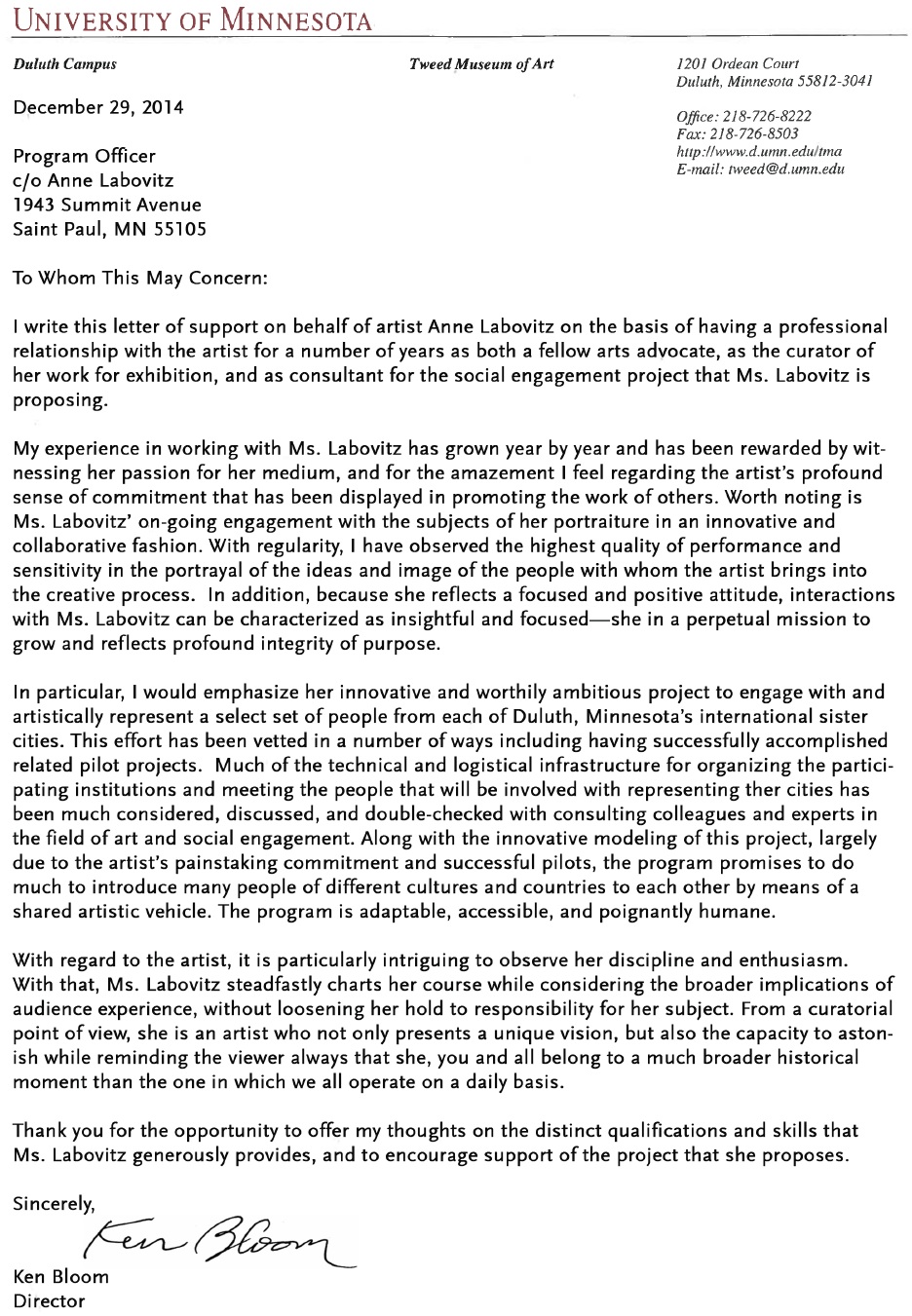
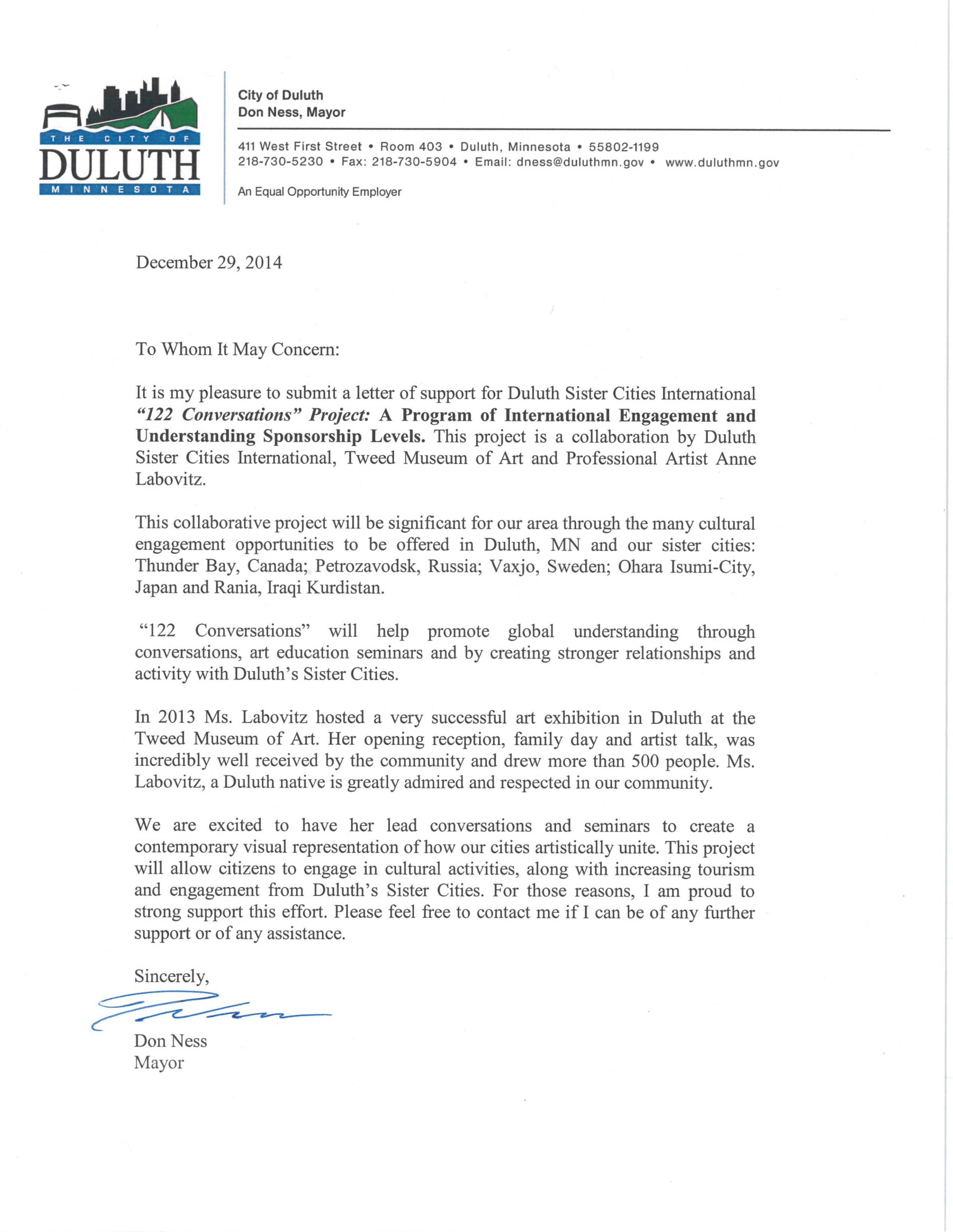
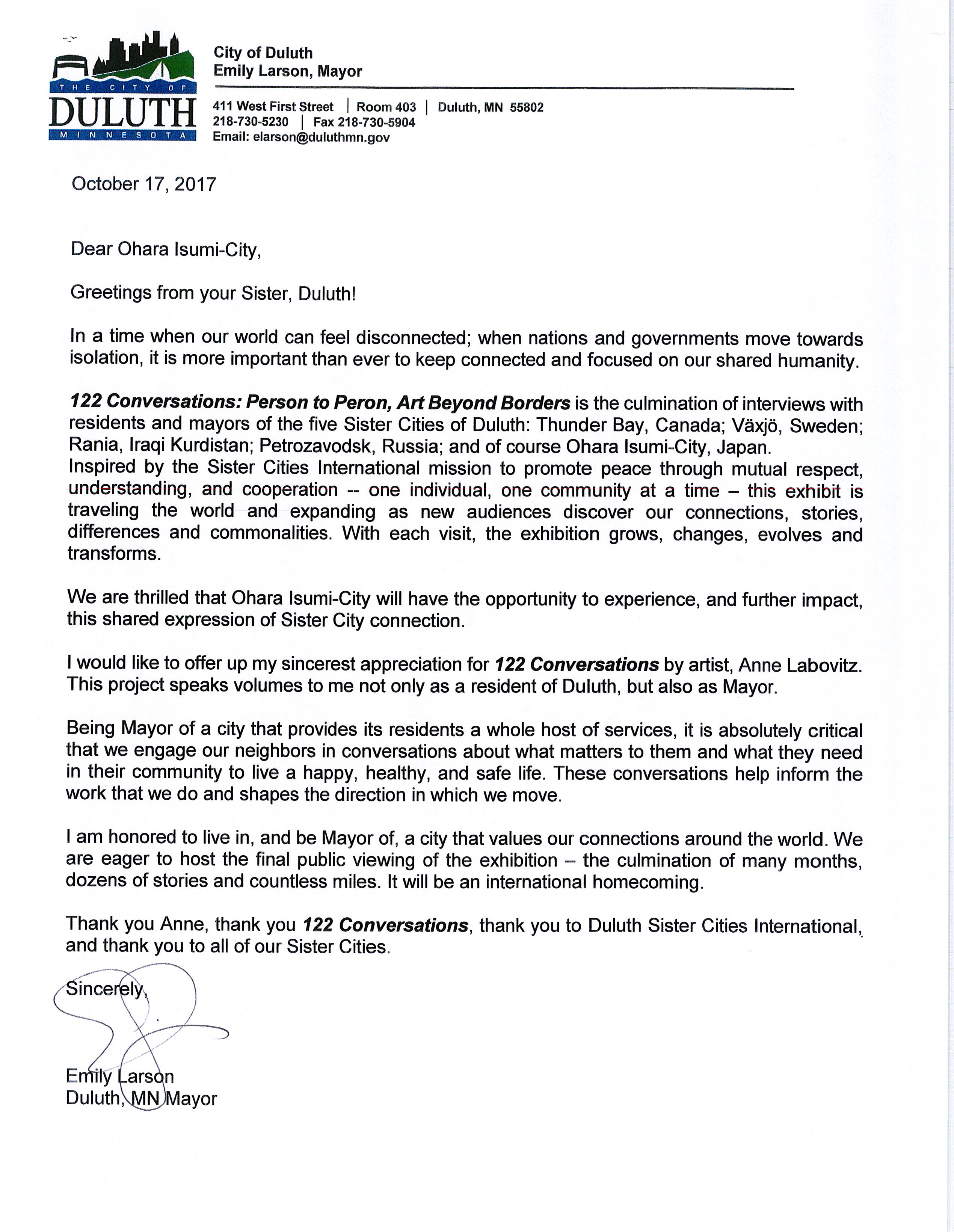
Read letters of support for this project from the former mayor of Duluth, MN, Don Ness, the current mayor of Duluth, Emily Larson as well as from the director and curator of the Tweed Museum of Art, Ken Bloom.
In a world where the value of a person has been reduced to its ability to produce and consume—to serve a system that sees us as data to analyze consumerism trends— the act of caring for the other and for oneself becomes an act of resistance. Our own conversations became a way to move around this system, a way to establish an economy that was not related to a monetary exchange of resources, but instead, was based on the desire to help each other and being able to provide some kind of assistance—emotional, practical, theoretical—to establish our own economy of friendship. Labovitz’s 122 Conversations” is an exploration of how a political, social and cultural platform can be turned into a personal act of care.” – Omayra Alvarado, Artist and Curator, 2017
I want to say–Thank you Anne for making this project happen! You not only brought our Sister City communities together, encouraging them to explore and express the spirit of their cities–but you made it fun. In addition, you opened the project to refugees who find themselves in a new place, trying to understand the spirit in their new lives. – Liz Taylor, DSCI President
The 122 Conversations exhibit in Rania brought together a host of community members, some representing the Raparin University, city officials, and Sister City delegates. “Wow! Wow! This is hyper modern art at its best!,” declared the director of the art dept., as he stood there transfixed. I had to Google to find the definition of hyper modern, because this term was not in my vocabulary.He said the script (writing) on the banners were like ‘musical notes, and a feast to the eyes’. That same evening we had the grand opening which drew a standing roomful of citizens from toddlers to senior citizens.
In Isumi City folks looked up to the balcony in awe as the banners from the five sister cities were unfurled one at a time. Some described them as ‘waterfall rainbows’ and wished they would be there permanently.
We felt privileged to witness the expressions on their faces as the art pieces were presented for public viewing. And, many of our hosts felt honored that we were there to share a common message through art. – Jill & Koresh Lakhan, DSCI Delegates
Jeri and I were part of a 5 person delegation that visited our Sister City Rania, in Kurdistan, Iraq in January 2017. They have a beautiful new university, and “122 Conversations” was going to be exhibited there. The whole exhibit was neatly packed into one suitcase, and the first amazing thing was the look on our hosts’s faces as they watched roll after roll come out of this suitcase – much like watching clowns exit a VW bug at the circus.
Everyone pitched in to hang the paintings and set up the interactive displays. The Rania Art Professor was absolutely ecstatic when he saw what we had. The opening was a great success; local dignitaries, university personnel, and school children all came and it was a noisy, crowded, fun event, and served as just one more dab of glue helping to cement the new relationship between our cities.
We were also part of the November delegation to Ohara Isumi-shi, Japan that was present for the grand opening, as well as attending a number of other events at which Anne worked. . Anne came and spent over a week, working with local artists and city officials to produce a true extravaganza.The opening took place at City Hall, was very well attended, and was dramatic – each of the 12 paintings that make up “122 Conversations” was unrolled from a balcony and allowed to hang free above the main foyer through which one enters the building . What a spectacle.
But as delightful as that was, Anne’s work with local artists to provide demonstrations and hands on painting opportunities for school children throughout the week using numerous venues, was absolutely wonderful. There were magical moments.
We believe that this project, conceived by, created by, and in three of our five Sister Cities personally attended by Anne Labovitz, together with all of the educational offerings, has been a huge success, and we are proud and humbled to have been a small part of it. – Gale And Jeri Kerns, DSCI Delegates
Art is a Bridge towards Peace
How did you feel participating? It was an honor to be involved. The exhibition was stunning! It was wonderful to help Annie develop and lead workshops with college students, school groups, and the deeply moving Family Day with refugee children and their mothers. I loved watching Annie’s method of including and welcoming everyone into the gallery and into the workshop; it was a true celebration of global harmony through art. She filled the art gallery with rich magical colors, metallic glimmering text and energetic marks, which were a visually dazzling contrast to the dark winter white of March outside. Everyone who entered the gallery smiled and was filled with excitement. It was a welcoming space and in the middle of the gallery was a place to sign in, to actively participate and engage in the creative space and to build community.
Her project goals of building cultural bridges and creating respectful cross cultural understanding was fully realized.
I assisted Annie in 9 art workshops with children and youth. It was a dynamic exchange of ideas, critical discussions, and empowerment for the youth and their teachers involved: We had one student from Syria create the most beautiful symbolic drawing of hands with flags from Sweden and Syria. He drew religious symbols coming out of the fingertips and in Swedish he wrote “there is no difference.” At the Family Day, refugee children and their mothers were each welcomed by Annie with warm embraces, food, art tables set up. It was a welcoming space for them. People entered timidly and after 2 hours left smiling, more confident, happy and many had painted their faces, made paper flowers, received art supplies and had found a new sense of belonging in a new place. It was an absolutely magic day and months afterwards, the Konsthall staff asked for the refugee to contacts to invite them back. This was wonderful news. I still think back to this as one of the most important teaching experience of my career as an art educator. I will never forget the eyes of the refugee children and their deep appreciation for Annie’s political act of caring.
This global project has had profound effects and from my experience in it, I am committed to continue to find ways, and funds, to nourish the creative imaginations of all children especially marginalized and immigrant groups. This project became a socially responsive way to promote tolerance and global understanding in one small but deeply meaningful and fulfilling way. – Alison Aune, Professor of Art Education, University of MN, Duluth